Books
Books that shaped the faith throughout the ages.
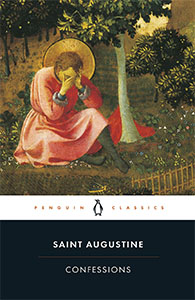
Confessions
Augustine's autobiography of his restless journey from sin to God — the first great spiritual memoir in Christian history. Its opening sentence names the human condition more precisely than most sermons: 'Our heart is restless, until it rests in Thee.'

The City of God
Augustine's twenty-two-book answer to Rome's fall in 410 AD — and the first Christian philosophy of history. The book's argument: history is not Rome's story, or any empire's story. It is the story of two cities, founded on two loves, moving toward a judgment that only God will render.

The Dialogue
A medieval mystic's dictated conversation with God, held together by one unforgettable image — Christ crucified as the Bridge from earth to heaven. Christocentric to its core, and Roman Catholic in its scaffolding.

The Interior Castle
Teresa's spiritual map written under the shadow of the Inquisition — the soul as a crystal castle with seven dwelling places, God at the center. From the outer court to the Holy of Holies, every step asks the same question: how deep will you let God go?

Pensées
Pascal's unfinished apology for Christianity argues that reason alone cannot lead to God — that the heart has its reasons, that man is both glory and ruin, and that only Christ bridges the infinite gulf between human misery and divine greatness.

The Spiritual Guide
Molinos's guide to interior prayer written in the shadow of the Inquisition — how the soul moves from external exercise to internal rest, from meditation to contemplation, from its own effort to God's work. Rome condemned the book and its author died in prison, but its teaching never disappeared.

The Pilgrim's Progress
A dream-allegory written from a Bedford jail: a man with a burden on his back flees a doomed city alone, bound for the Celestial City. The burden falls off not when he reforms, nor when he keeps the law, but only at the Cross — a Scripture-soaked map of the Christian life that both Brother Watchman Nee and Brother Witness Lee treasured, and whose limits both named.

The Practice of the Presence of God
Conversations and letters of a seventeenth-century monk who found God equally present in the kitchen and the chapel — a small classic on unbroken communion with God in the ordinary moments of daily life.

Either/Or: A Fragment of Life
Kierkegaard stages a confrontation between two ways of living — the aesthetic, which seeks pleasure and avoids commitment, and the ethical, which chooses, marries, and accepts responsibility. The book does not tell you which life to choose. It shows you what each looks like from the inside, then leaves you to decide.

Fear and Trembling
Kierkegaard argues that Abraham's willingness to sacrifice Isaac cannot be understood through ethics or reason — that genuine faith operates in a category beyond the universal, where the individual stands alone before God in a relationship no one else can mediate or explain.

The Cross: Crucified with Christ, and Christ Alive in Me
J.C. Ryle's forty-seven-page polemic on why the cross must stand at the center of everything — faith, preaching, and eternal hope. Built from Paul's boast in Galatians 6:14, it diagnoses every form of religion that has quietly displaced Christ crucified.

The Christian's Secret of a Happy Life
Hannah Whitall Smith's practical guide to the life of full surrender and rest in Christ — one of the most widely read devotional books of the nineteenth century, born out of the Keswick holiness movement.

Abide in Christ
Murray's thirty-one meditations on John 15 make one argument: every spiritual problem — dryness, failure, weakness — traces to a single root, and the root is not trying harder. The branch does not produce the fruit. It only needs to remain in the vine.

Union and Communion
Taylor's thirty-five-page meditation on the Song of Songs traces a soul's journey through union and communion with Christ — from first longing to final rest. Its sharpest diagnosis: the root of an unsatisfied spiritual life is not ignorance but an unsurrendered will.

Humility
In twelve chapters, Andrew Murray diagnoses a problem religious life tends to overlook: the harder a Christian pursues holiness, the more easily pride disguises itself as devotion — and the only reliable test of the difference is deepening humility.
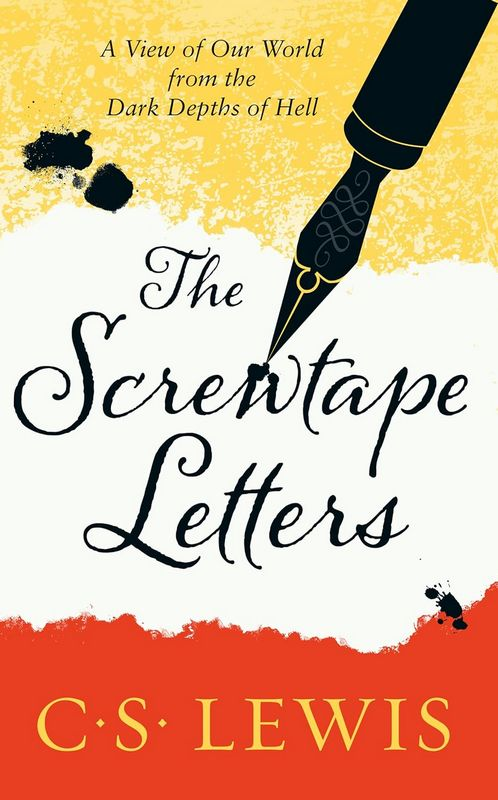
The Screwtape Letters
Letters from a senior devil to his apprentice nephew on the art of tempting a human soul — Lewis's most original work, exposing the subtle mechanisms of spiritual decay through darkly comic inversion. It remains the sharpest literary diagnosis of the ordinary Christian's interior battlefield.
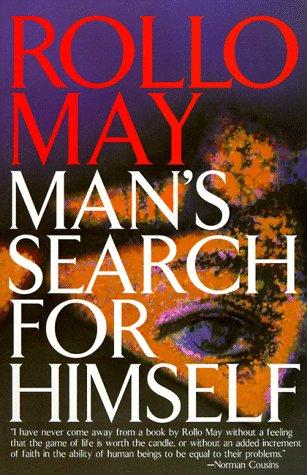
Man's Search for Himself
Rollo May argues that the distinctive crisis of modern life is not guilt or anxiety alone but emptiness — the hollow sense that one's life has no center. Drawing on existential philosophy and clinical practice, he charts an honest path from hollow conformity toward genuine selfhood.

The Normal Christian Life
Brother Watchman Nee's exposition of Romans chapters one through eight — the Christian life does not begin with a great "must do" but with a great "it is done." Over one million copies sold, translated into dozens of languages, this book remains one of the most powerful entry points into the inner life.

Sit, Walk, Stand
Brother Watchman Nee's compact study of Ephesians turns the whole Christian life on a hinge — you cannot walk before you have sat, and you cannot stand until you have learned to walk.

Prayer: Conversing with God
Rosalind Rinker's autobiographical guide that taught a generation of evangelicals to pray as honest two-way conversation with a present Person — Christianity Today's most influential evangelical book of the prior fifty years.

Why Revival Tarries
Leonard Ravenhill's prophetic indictment of the prayerless church. The book's core claim: revival does not tarry because God withholds it — it tarries because the church has abandoned agonizing prayer, Holy Ghost unction, and the prophet's burden.

The Knowledge of the Holy
Tozer argues that the most urgent need of the church is not better methods but a restored vision of God — that what we think about God is the most important thing about us, and the recovery of reverence begins with recovering the weight of the divine attributes.

Holy Spirit Power
A collection of six sermons on the Holy Spirit by Charles Spurgeon, spanning thirty-six years of his ministry — from the fire of his youth at twenty to the depth of his final days. The burden of the entire book is singular: the Holy Spirit is not an influence; He is a living person. Without Him, everything spiritual is empty.