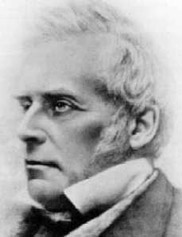
“So far as men pride themselves on being Established, Presbyterian, Baptist, Independent… they are antichristian.” — J.N. Darby, Considerations on the Nature and Unity of the Church of Christ (1828)
Life
John Nelson Darby was born on 18 November 1800 in Westminster, London. His uncle had commanded a ship under Admiral Nelson — the source of his middle name. He entered Westminster School at eleven, then Trinity College, Dublin, where he won the Classical Gold Medal at eighteen — the highest honor in classics the university awarded.
He studied law at King’s Inns, Dublin, and was called to the Irish Chancery Bar in 1822. He never practiced. Something else had taken hold of him.
In 1825, Archbishop William Magee of Dublin ordained Darby as deacon. The following year he was priested and assigned to the parish of Calary in County Wicklow — rough, mountainous, Catholic country. He lived in a peasant’s cottage on a bog and threw himself into the work. Reports from the period suggest 600 to 800 Roman Catholics were converting to Protestantism each week across the region.
Then two blows fell in quick succession. In late 1826, Archbishop Magee issued a charge portraying Church of Ireland clergy as servants of the state — not servants of Christ. Early in 1827, he required prospective converts to swear oaths of supremacy and allegiance to the British crown before they could be received into the church. Darby watched his converts — people who had come to faith in Christ — turned away because they would not swear political loyalty. The conversions stopped almost overnight.
In October 1827, a horse threw Darby against a doorpost, badly injuring him. During a long convalescence in Dublin, he underwent a spiritual transformation that redirected his entire life. He later wrote that the Lord opened his eyes without human teaching: Christ in heaven was the Head of the church. The Bible was the Christian’s sole authority. The idea of a clergyman — a special class mediating between God and His people — was “a sin against the Holy Spirit” because it denied that the Spirit could speak through any member of the body.
He never returned to his parish in the same way.
By late 1827, Darby had joined an informal gathering in Dublin with Anthony Norris Groves, Edward Cronin, J.G. Bellett, and Francis Hutchinson. They met to break bread together — no ordained minister, no liturgy, no denominational name. Just believers around the Lord’s table. This was the seed of the Plymouth Brethren movement.
In 1828, Darby published his first major pamphlet, Considerations on the Nature and Unity of the Church of Christ — a declaration of war against the entire denominational system. The movement spread from Dublin to Plymouth, England — where the name “Plymouth Brethren” stuck — and from there across Britain and the continent.
Between 1831 and 1833, Theodosia, Countess of Powerscourt, hosted three landmark prophecy conferences at her estate in County Wicklow. The third drew nearly 400 attendees. At these conferences, Darby publicly refined his dispensational framework and his doctrine of the pretribulation rapture. These ideas would reshape global evangelicalism.
In 1838, Darby traveled to Switzerland, where his lectures in Lausanne became the basis for his masterwork, the Synopsis of the Books of the Bible — a commentary on every book of Scripture, first written in French. He also produced a fresh Bible translation from the Hebrew and Greek — the Darby Bible — with the New Testament published in 1867 and the complete Bible appearing posthumously in 1890. Parallel translations followed in French and German.
Darby’s greatest crisis came in 1848. Benjamin Wills Newton, a leader in the Plymouth assembly, taught views on Christ’s person that Darby considered heretical. Darby withdrew. When two members of Newton’s congregation sought communion at George Mueller’s Bethesda Chapel in Bristol, and Mueller’s elders declined to investigate Newton’s writings, Darby issued the “Bethesda Circular” — excommunicating the entire Bethesda assembly. Mueller condemned Newton’s teaching but refused to accept Darby’s principle that entire assemblies could be cut off for the failures of individuals.
The result was a permanent split. The Exclusive Brethren followed Darby’s “connexional” principle — assemblies linked by shared discipline, with separation from evil as the basis of unity. The Open Brethren followed Mueller’s congregational principle — each assembly autonomous, receiving believers on the basis of faith in Christ. The wound never healed. Over the following decades, the Exclusive Brethren themselves fractured into more than a hundred divisions.
Darby spent his final decades traveling ceaselessly — Canada, the United States, the West Indies, New Zealand, Australia, continental Europe. He was described as “one of the most unworldly men who ever lived.” During a severe illness in Canada, he wrote The Man of Sorrows, a lengthy poem on the sufferings of Christ.
He died at Bournemouth on 29 April 1882, age eighty-one.
Timeline
- 1800 — Born 18 November in Westminster, London
- 1811 — Entered Westminster School as a boarder
- 1819 — Graduated Trinity College Dublin with Classical Gold Medal
- 1822 — Called to the Irish Chancery Bar; never practiced
- 1825 — Ordained deacon by Archbishop Magee of Dublin
- 1826 — Ordained priest; assigned to the parish of Calary, County Wicklow
- 1827 — Magee’s oath requirement halts Catholic conversions; horse accident in October; spiritual transformation during convalescence; joins Dublin breaking of bread with Groves, Cronin, Bellett, Hutchinson
- 1828 — Publishes Considerations on the Nature and Unity of the Church of Christ
- 1831–33 — Powerscourt Conferences; publicly teaches dispensationalism and the pretribulation rapture
- 1838 — Travels to Switzerland; Lausanne lectures become the basis of the Synopsis
- 1845 — Newton controversy erupts in the Plymouth assembly
- 1848 — Issues the Bethesda Circular; permanent Open/Exclusive Brethren split
- 1857–67 — Synopsis of the Books of the Bible published (5 volumes)
- 1859 — First visit to Canada and the United States
- 1867 — Darby Bible New Testament published
- 1872 — Revised New Testament published
- 1882 — Died 29 April at Bournemouth, age eighty-one
- 1890 — Complete Darby Bible with Old Testament published posthumously
Teaching
Three convictions drove everything Darby built.
The ruin of the church. Darby held that the visible, professing church had fallen into total ruin from its original scriptural state. Any attempt to restore it on New Testament grounds was futile. “The Church, as responsible on earth, is in ruins; its organizations, for they are many, are not God’s” (What the Christian has amid the ruin of the Church). If Paul addressed an epistle “to the assembly of God which is at Kingston” today, Darby said, “there is no such body to get it; it must go to the dead letter office.”
This was not despair. It was ground-clearing for what came next.
Separation from evil as the principle of unity. In his pamphlet of that title, Darby argued that separation from evil — not organizational union — was the divine basis for Christian fellowship. “What are called communions are… disunion; and, in fact, a disavowal of Christ and the word” (Considerations on the Nature and Unity of the Church of Christ). Believers should gather around Christ alone, with no denominational name, no clergy, no creed beyond Scripture.
Dispensationalism. Darby divided God’s dealings with humanity into distinct dispensations — each revealing a principle of God’s government, placing responsibility in human hands, and ending in human failure. “The dispensations themselves all declare some leading principle or interference of God, some condition in which He has placed man, principles which in themselves are everlastingly sanctioned of God, but in the course of those dispensations placed responsibly in the hands of man” (The Apostasy of the Successive Dispensations).
Central to this framework was a sharp distinction between Israel and the Church. Prophecy belonged to the earth and to Israel; the Church was heavenly in its calling and destination. “Prophecy applies itself properly to the earth; its object is not heaven… The privilege of the church is to have its position in the heavenly places.” From this followed his doctrine of the pretribulation rapture — the Church caught up to meet Christ in the air before the great tribulation falls on Israel and the nations. “This distinguishes with much precision between our departure hence to join the Lord in the air, and our return to the earth with Him” (Synopsis, on 1 Thessalonians 4:15).
Connection to the recovery
The thread from Darby to Brother Watchman Nee runs through a single person: Margaret E. Barber (1866–1930), an English missionary in Fuzhou with informal ties to the Plymouth Brethren. She maintained a library of Brethren writings and held regular Bible classes where the young Nee discovered the works of Darby, William Kelly, C.H. Mackintosh, and C.A. Coates.
Nee held Darby in high regard. He told Brother Witness Lee that if Darby had not become a servant of the Lord, “he would have been famous in the world because he had a great soul.” When Lee asked Nee to recommend a single book for understanding the Bible, Nee answered without hesitation: Darby’s Synopsis of the Books of the Bible. “Read it four or five times to understand it well.” Nee later gave Lee a personal copy of the Synopsis as a gift in Shanghai (recorded in Brother Witness Lee’s Watchman Nee — A Seer of the Divine Revelation in the Present Age).
What Nee adopted from Darby is unmistakable: rejection of denominationalism, abolition of the clergy-laity distinction, plural eldership, worship centered on the Lord’s table, a high view of Scripture as sole authority. These were Brethren distinctives before they were recovery distinctives.
But Nee departed from Darby at a critical point. Darby’s Brethren had multiple assemblies in a single city. Nee taught that there should be only one church per city — the “ground of locality.” Brother Witness Lee later made this distinction explicit: “Some say that we have learned concerning the local church ground from the Brethren. But the Brethren did not see this. If they had seen the unique ground of the church, they could not have many assemblies in one city” (The Practical Expression of the Church, Chapter 8).
Nee also rejected Darby’s principle of exclusive separation. In 1933, Nee visited the Exclusive Brethren in England, but the Brethren discovered he had broken bread with believers outside their fellowship — including T. Austin-Sparks in London. In August 1935, the Exclusive Brethren severed fellowship with Nee and his movement. Nee accepted the break. For him, the table belonged to the Lord, not to any group’s discipline.
Brother Witness Lee identified the Brethren’s legacy with precision — both its glory and its failure. On the positive side: “The greatest and most powerful teacher among them was J. N. Darby,” called “the king of Bible exposition” (The Full Knowledge of the Word of God, Chapter 4). “Among the different theologies, the highest and most trustworthy is the Brethren theology” (The All-Inclusiveness and Unlimitedness of Christ, Chapter 3). “The Brethren under the leadership of Darby experienced a wonderful recovery of the church life, a recovery that was more complete and adequate than that under Zinzendorf a century earlier” (The Genuine Ground of Oneness, Chapter 10).
On the failure: “The Bible was opened some three centuries later in the hands of the Plymouth Brethren, under the leadership of J.N. Darby and others… But alas! the Brethren fell into the snare of the subtle one. Yes, they opened up the Bible for us, but they fell into the trap of knowledge in letters” (Life Messages, Vol. 2, Chapter 7). “Due to debates over doctrine, the oneness was lost, and the Brethren were divided… they were divided into more than a hundred divisions” (The Genuine Ground of Oneness, Chapter 10).
Lee reframed Darby’s central concept. Where Darby understood oikonomia (economy/dispensation) as periods of time in God’s government, Lee developed it as God’s dispensing of Himself into humanity — not a timeline but a living process. The word stayed the same; the meaning shifted from administration to distribution, from plan to person.
The Brethren, in Lee’s reading of Revelation, were the church in Philadelphia — the church of brotherly love, the church that kept the Lord’s word. And then Philadelphia went to seed. “Twenty or thirty years after the Brethren were raised up, they became degraded and divided again” (The Riches and Fullness of Christ and the Advanced Recovery of the Lord Today, Chapter 5).
Significance
Darby opened the Bible for a generation. His Synopsis of the Books of the Bible remains one of the most penetrating verse-by-verse commentaries ever written. His dispensational framework — whatever its debated points — gave millions of believers a way to read the whole Bible as a coherent story with distinct stages, moving toward a definite consummation.
His ecclesiology struck at the root of institutionalism. No clergy class. No denominational walls. No creed but Scripture. Every member functioning. The Lord’s table as the center of corporate life. These were not theoretical positions; Darby lived them, abandoning a brilliant legal career and the security of the established church to meet in rented rooms with a handful of believers.
His influence on global evangelicalism is incalculable. The Scofield Reference Bible (1909), which embedded Darby’s dispensational notes alongside the biblical text, sold over two million copies by 1943 and shaped the theological vocabulary of American Protestantism. Dallas Theological Seminary, the Niagara Bible Conferences, and popular works like the Left Behind series all trace their roots to Darby’s framework.
Harold St. John called him “the greatest constructive theologian who has arisen since the Apostle Paul.” A large claim. But no one in the nineteenth century did more to recover the truth that the Church is not an institution, not a denomination, not a building — but the body of Christ, heavenly in calling, waiting for its Lord.
Darby’s life asks a question that has not gone away: What do you do when the institution you serve no longer serves the Lord’s purpose? He answered by walking out — not in bitterness, but in obedience. He left behind a brilliant career, a secure position, and the approval of the established order. He gathered with a handful of believers around the Lord’s table and trusted the Spirit to lead.
What he built was extraordinary. What it became — divided, exclusive, killed by the letter — is a warning. The recovery of truth is never the end. Truth must lead to life, and life to love, and love to the building of the one body. Darby opened the Bible. The question for every generation after him is whether we will let the Bible open us.