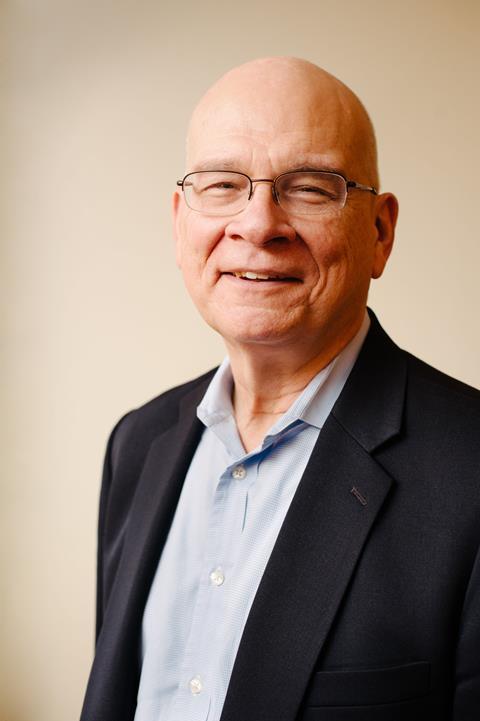
“The gospel is this: We are more sinful and flawed in ourselves than we ever dared believe, yet at the very same time we are more loved and accepted in Jesus Christ than we ever dared hope.” — Timothy Keller, The Meaning of Marriage
Life
Timothy Keller was born on September 23, 1950, in Allentown, Pennsylvania. In 1970, while studying at Bucknell University, he came to faith in Christ through InterVarsity Christian Fellowship. (See byFaith obituary)
After earning his bachelor’s degree from Bucknell in 1972, he entered Gordon-Conwell Theological Seminary, where he studied under Meredith Kline and Richard Lovelace and met his future wife, Kathy Kristy. He received his Master of Divinity in 1975, married Kathy that January, and was ordained by the Presbyterian Church in America (PCA). (See Timothy Keller official bio)
From 1975 to 1984, he pastored West Hopewell Presbyterian Church in Hopewell, Virginia, for nine years while also serving as church-planting director for the PCA’s Mid-Atlantic region. He then joined Westminster Theological Seminary as associate professor of practical theology and earned his Doctor of Ministry degree under Harvie Conn, focusing on mercy ministry in urban settings. (See Reformed Faith & Practice)
In 1989, Keller moved to Manhattan with his wife and three sons and founded Redeemer Presbyterian Church. Over his twenty-eight years as senior pastor, the church grew from nothing to over 5,000 weekly attendees. He stepped down as senior pastor on July 1, 2017. (See Christianity Today obituary)
In 2001, he co-founded Redeemer City to City, which has helped plant over 838 churches in more than 140 cities worldwide. In 2005, he co-founded The Gospel Coalition with D.A. Carson. (See Redeemer City to City)
In June 2020, Keller was diagnosed with pancreatic cancer. He passed into the Lord’s presence on May 19, 2023, at the age of seventy-two. (See CNN obituary)
Newsweek called him “a C.S. Lewis for the twenty-first century.” His books have sold over two million copies and been translated into twenty-five languages. (See Timothy Keller official bio)
Timeline
- 1950 — Born September 23 in Allentown, Pennsylvania
- 1970 — Came to faith in Christ at Bucknell University
- 1972 — Earned bachelor’s degree from Bucknell University
- 1975 — Received Master of Divinity from Gordon-Conwell Theological Seminary; married Kathy Kristy; ordained by the PCA
- 1975–84 — Pastored in Hopewell, Virginia
- 1981 — Earned Doctor of Ministry from Westminster Theological Seminary
- 1984–89 — Taught at Westminster Theological Seminary
- 1989 — Founded Redeemer Presbyterian Church in Manhattan, New York
- 2001 — Co-founded Redeemer City to City church-planting network
- 2005 — Co-founded The Gospel Coalition with D.A. Carson
- 2008 — Published The Reason for God and The Prodigal God
- 2012 — Published Every Good Endeavor and Center Church
- 2014 — Published Prayer
- 2017 — Stepped down as senior pastor of Redeemer Presbyterian Church
- 2020 — Diagnosed with pancreatic cancer
- May 19, 2023 — Passed into the Lord’s presence
Teaching
The Gospel as the Hub of the Wheel
Keller’s most central insight: the gospel is not an introductory course for the Christian life that you complete before moving on to advanced material. The gospel is the center of everything — all truth and all renewal radiate from it.
“The gospel is not the first ‘step’ in a ‘stairway’ of truths, but more like the ‘hub’ in a ‘wheel’ of truths.” — Redeemer City to City, “The Centrality of the Gospel”
The “Third Way” — Neither Moralism nor Relativism
Keller identified two opposing distortions: religious moralism (truth without grace, earning salvation through works) and irreligious relativism (grace without truth, denying objective moral standards). The gospel transcends both — both paths amount to “avoiding Jesus as Savior and keeping control of your own life.” (See Redeemer City to City, “The Centrality of the Gospel”)
Idols — The Root of All Sin
“What is an idol? It is anything more important to you than God, anything that absorbs your heart and imagination more than God.” — Keller, Counterfeit Gods
Keller taught that the essence of sin is not merely breaking rules but turning good things into ultimate things — placing career, family, identity, or success in God’s rightful place. Behind every sin lies an idol.
Integrating Faith and Work
“A job is a vocation only if someone else calls you to do it for them rather than for yourself.” — Keller, Every Good Endeavor
Keller refused to separate “spiritual” matters from “secular” ones. Every legitimate occupation is a way to serve God and neighbor, a means of participating in God’s work of renewing all things.
Urban Ministry
“Christians are called to be an alternate city within every earthly city. We must live in cities and serve all the people in them — not just our own tribe.” — Christianity Today
Relation to the Lord’s Recovery
There is no documented direct citation or connection between Keller and Brother Watchman Nee or Brother Witness Lee. Keller’s theological roots lay in the Reformed tradition (Edwards, Lewis, Bavinck, Newbigin), not in the inner-life tradition.
Yet several thematic parallels are worth noting:
Both were urban church planters. Keller established a church in Manhattan and helped plant churches in over 140 cities worldwide through City to City. Brother Watchman Nee established churches in major cities across China, and Brother Witness Lee extended that work to major cities around the globe. Both recognized cities as strategic ground for the gospel.
Both stressed that the gospel is not just the entrance but pervades everything. Keller said the gospel is “the hub of the wheel,” not the first step on a staircase. Brother Watchman Nee likewise taught that Christ is not merely Savior but life itself — Christ should permeate every layer of the believer’s existence.
Both rejected two extremes. Keller rejected moralism and relativism, walking a “third way.” Brother Watchman Nee and Brother Witness Lee likewise rejected dead religion and worldly compromise, stressing the living Christ and genuine church life.
A key divergence: Keller operated within the Reformed denominational structure (Presbyterian), emphasizing cultural apologetics and intellectual engagement. Brother Watchman Nee and Brother Witness Lee operated outside denominational structures, emphasizing the experience of the inner life and the recovery of the practice of the early church. Keller’s approach entered through the mind — persuade first, then experience. The Lord’s recovery enters through the spirit — experience first, then understand. The two need not stand in opposition, but they represent different centers of gravity.
Significance
Keller spent his life demonstrating one thing: the gospel withstands the most rigorous intellectual scrutiny while still transforming hearts in the most secular of cities.
In Manhattan — one of the places most indifferent to Christianity — he built a vibrant church, not by lowering the bar but by raising it higher: not cheap grace, but the full gospel. He told skeptics that faith is no excuse to stop thinking. He told believers that the gospel is not a past-tense ticket but a present-tense power.
For Chinese-speaking Christians, Keller’s legacy poses a question: can we, like him, hold to the depth of truth while remaining open to culture — not to compromise, but to let the gospel speak to the human heart?
“Every other religion or system operates on the basis of fear and pride to motivate you to do what is right. Only the gospel motivates by joy.” — Timothy Keller