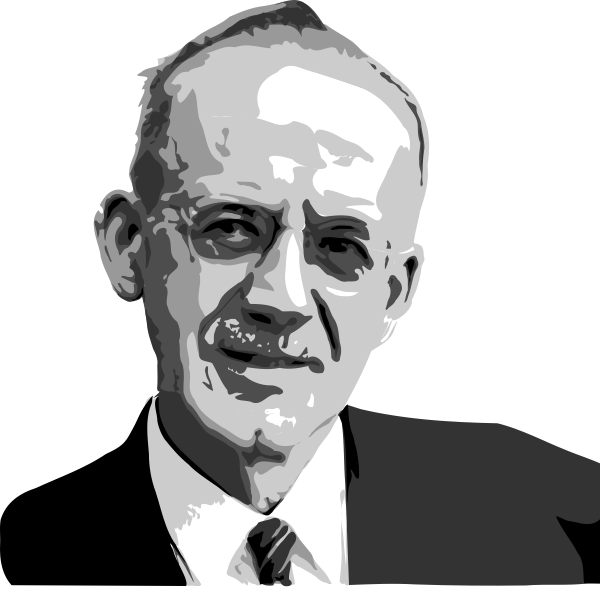
“What comes into our minds when we think about God is the most important thing about us.” — A.W. Tozer, The Knowledge of the Holy, Chapter 1
Life
Aiden Wilson Tozer was born on 21 April 1897 in La Jose, Pennsylvania, one of six children in a poor farming family. He attended only a country school, never earned a high school diploma, and had no formal theological training. In 1912, a house fire drove the family to Akron, Ohio, where young Tozer worked in a tire factory. (C.S. Lewis Institute)
In 1915, seventeen-year-old Tozer heard a street preacher on his way home from work: “If you don’t know how to be saved, just call on God and say ‘God, have mercy on me a sinner,’ and He will hear you.” That day he went home, climbed into the attic, and wrestled with God. When he came down, he was a new creation. (Robert J. Morgan)
From that point, Tozer educated himself. He read voraciously in public libraries — theology, philosophy, poetry, Christian mystics. In 1918 he married Ada Pfautz; they had seven children. In 1919 he began pastoring his first Christian and Missionary Alliance church in Nutter Fort, West Virginia. He was formally ordained in 1920. (C.S. Lewis Institute)
In 1928, Tozer accepted the call to Southside Alliance Church in Chicago, where he pastored for thirty-one years. The congregation grew from about eighty to over eight hundred. In 1950 he became editor of the Alliance magazine Alliance Weekly (later Alliance Life), a role he held until his death. From 1951, his sermons were broadcast on WMBI (Moody Radio) under the program title Talk From a Pastor’s Study. (C&MA Official History)
In 1959, Tozer left Chicago for Avenue Road Alliance Church in Toronto, Canada. He died of a heart attack in Toronto on 12 May 1963, aged sixty-six. His gravestone bears a single line: “A.W. Tozer — a man of God.” (Evangelical Times)
Timeline
- 1897 — Born 21 April in La Jose, Pennsylvania
- 1912 — House fire; family moved to Akron, Ohio; worked in tire factory
- 1915 — Heard street preaching in Akron; came to Christ
- 1918 — Married Ada Pfautz
- 1919 — Began pastoring first church in Nutter Fort, West Virginia
- 1920 — Ordained as C&MA pastor
- 1928 — Accepted call to Southside Alliance Church, Chicago; began thirty-one years of pastoral ministry
- 1948 — Published The Pursuit of God
- 1950 — Became editor of Alliance Weekly
- 1959 — Moved to Avenue Road Alliance Church, Toronto
- 1961 — Published The Knowledge of the Holy
- 1963 — Died 12 May in Toronto of heart attack
- 2000 — The Pursuit of God named to Christianity Today “Top 100 Books of the Century”
Teaching
The Pursuit of God’s Presence
One conviction lay at the heart of Tozer’s life: God can be known — not merely assented to in the mind, but experienced in the spirit.
“We have within us the ability to know Him in a way beyond mere intellectual cognition. That spiritual consciousness which is native to the soul of man and which is known to the race universally is sufficient to inform us that we are in the presence of Something (or Someone) other than ourselves.” — The Pursuit of God, Chapter 4
“We need not fear that in seeking God we may run past Him. He is not far from any one of us.” — The Pursuit of God
“Faith is the gaze of a soul upon a saving God.” — The Pursuit of God
The Forgotten Attributes of God
The Knowledge of the Holy was Tozer’s wake-up call to the church: we have lost the sense of God’s majesty, transcendence, and holiness.
“With the loss of the sense of majesty has come the further loss of religious awe and consciousness of the divine Presence.” — The Knowledge of the Holy
“The heaviest obligation lying upon the Christian Church today is to purify and elevate her concept of God until it is once more worthy of Him.” — The Knowledge of the Holy
“The essence of idolatry is the entertainment of thoughts about God that are unworthy of Him.” — The Knowledge of the Holy
Critique of Shallow Christianity
Tozer’s most prophetic voice was his warning against churches that replace worship with entertainment:
“A church that can’t worship must be entertained.” — Grace Gems
“Religious entertainment has so corrupted the church that millions of people don’t know it’s heresy.” — Grace Gems
“We’ve simplified Christianity to: God is love; Jesus died for you; believe, accept, be happy, have fun, and tell others. And off we go — that’s Christianity today. I wouldn’t give you a dime for the whole business.” — Tozer, Rut, Rot…Revival
Mystic and the Inner Life
Tozer openly called himself a mystic. When challenged, he answered: “Of course I am. How else can you have a personal relationship with the Lord Jesus Christ?” (C.S. Lewis Institute)
His definition was simple:
“He differed from the average orthodox Christian only because he experienced his faith down in the depths of his sentient being while the other did not.” — Tozer, preface to The Christian Book of Mystical Verse
Tozer kept a reading list that included Brother Lawrence’s The Practice of the Presence of God, Fénelon’s Christian Perfection, Meister Eckhart’s Talks of Instruction, John of the Cross’s Dark Night of the Soul, Thomas à Kempis’s The Imitation of Christ, Augustine’s Confessions, and Molinos’s Spiritual Guide. The list reads like a map of the inner-life tradition.
Connection to the Recovery
No direct written exchange links Tozer to Brother Watchman Nee. But their spiritual lineage shares a common source: the Christian inner-life tradition — the Quietists, the mystics, and the Deeper Life movement.
Tozer’s recommended reading included works by Fénelon (Madame Guyon’s close friend) and the Quietist classic by Molinos. Brother Nee translated and published Madame Guyon’s works and was deeply shaped by them. Both drew from the same river of inner-life tradition.
The thematic parallels are striking:
| Theme | Tozer | Brother Watchman Nee |
|---|---|---|
| Experiencing God | ”We have within us the ability to know Him” | The Normal Christian Life — Christ living in us |
| Inner life | A mystic is one who “practices the presence of God” | Translated and published Quietist works; taught the inner life |
| Spirit and soul | Distinguished head-knowledge from heart-knowledge | The Spiritual Man systematically distinguishes spirit, soul, and body |
| Critique of shallowness | ”A church that can’t worship must be entertained” | Warned against outward religious activity replacing inward reality |
| Deeper life | Wrote The Key to the Deeper Life; stood in the “higher life” tradition | Stood in the Keswick/deeper life tradition |
| Self-educated | No formal theological training; learned in libraries | Also largely self-taught; once read the New Testament fifty-two times in a year |
| Common mystic sources | Brother Lawrence, Madame Guyon, Fénelon, Molinos | Madame Guyon, Jessie Penn-Lewis, Andrew Murray, T. Austin-Sparks |
Significance
Tozer has been called “the prophet of the twentieth century” — not because he predicted the future, but because he said what others in his day would not. He warned that the church was losing the fear of God, replacing worship with entertainment, holiness with success, and knowing with mere knowledge. Sixty years later, his words cut deeper than ever.
For believers emerging from controlled environments, Tozer’s voice carries a particular comfort: he proved that one can love the inner life deeply, can pursue God’s presence fervently, without attaching to any single movement or organization. He served in the Alliance his whole life yet was never defined by any institution. His allegiance was to God alone — the God he spent his life pursuing.
Back to his most famous line: “What comes into our minds when we think about God is the most important thing about us.” It is both an invitation and a judgment — an invitation to raise our conception of God, a judgment on everything we substitute in His place.