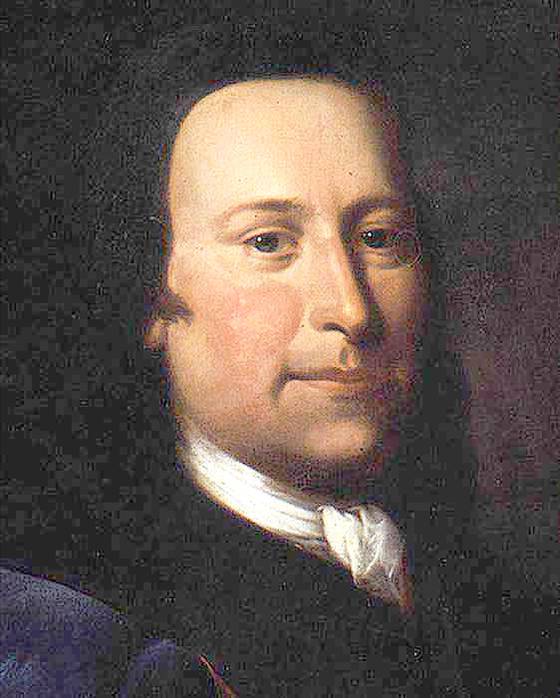
“I have one passion: it is He, and He alone.” — Count Zinzendorf, (Goodreads)
Life
Count Nikolaus Ludwig von Zinzendorf was born on 26 May 1700 in Dresden, Saxony, into a noble family. His father died six weeks after his birth, and he was raised by his grandmother — a devout Pietist. (Wikipedia; Britannica)
At ten he was sent to Francke’s Paedagogium at Halle, where he spent six years in Pietist education. There he and several schoolmates formed the “Order of the Grain of Mustard Seed,” pledging their lives to Christ. (Christian History Institute; Wikipedia)
In 1719, at a gallery in Düsseldorf, Zinzendorf stood before Domenico Feti’s painting Ecce Homo — Christ wearing the crown of thorns. The inscription read: “This I have done for you; what have you done for Me?” The moment marked the rest of his life. (Christian History Institute)
In 1722, Zinzendorf purchased the Berthelsdorf estate in Saxony. That same year, a group of Protestant refugees from Moravia (modern Czech Republic) — spiritual descendants of the Hussites — asked to settle on his land. They built a village on the hillside and named it Herrnhut, meaning “the Lord’s watch.” (Wikipedia; Christianity.com)
The community was rife with conflict at first — refugees from different backgrounds clashed over doctrine and practice. Zinzendorf intervened personally, drafted community rules, and visited families one by one. On 13 August 1727, during a communion service, the Holy Spirit fell on the community as at Pentecost. The congregation was broken, confessed to one another, and unity was restored. The Moravian Brethren remember this day as their “Pentecost.” (Christian History Institute; Christianity.com)
Less than two weeks later, on 27 August 1727, Herrnhut began a round-the-clock prayer watch. Twenty-four brothers and twenty-four sisters each took a one-hour shift. This prayer vigil continued for over a hundred years — into the nineteenth century. (Christianity.com)
In 1732, Herrnhut sent out the first Protestant missionaries — two young brothers to the Danish West Indies (now the US Virgin Islands) to preach to enslaved people. Within twenty years, the Moravians sent hundreds of missionaries to Greenland, South Africa, Suriname, and Native American tribes in North America. No Protestant body of that era matched the Moravians’ ratio of missionaries to members. (Wikipedia; Christian History Institute)
In 1736, Zinzendorf was exiled from Saxony. He traveled widely — to England, the Netherlands, North America (1741–1743, where he named the town of Bethlehem, Pennsylvania), and the Caribbean — establishing Moravian congregations. (Wikipedia)
He was permitted to return to Saxony in 1747. On 9 May 1760, he died at Herrnhut, aged fifty-nine. As the brothers gathered around his bed, his son-in-law told him the Lord was about to take him home. Zinzendorf replied: “I am going to the Saviour. I am ready. If He is no longer willing to make use of me, I am quite willing to go to Him. There is nothing to hinder me now.” (Wikipedia)
Timeline
- 1700 — Born 26 May in Dresden
- 1710 — Entered Francke’s school at Halle; formed “Order of the Grain of Mustard Seed”
- 1719 — Stood before Feti’s Ecce Homo in Düsseldorf; a life-defining moment
- 1722 — Purchased Berthelsdorf estate; Moravian refugees built Herrnhut
- 1727 — 13 August: Herrnhut revival (“Moravian Pentecost”); 27 August: round-the-clock prayer watch began
- 1732 — Sent out the first Protestant missionaries
- 1736 — Exiled from Saxony
- 1741–1743 — Traveled to North America; named Bethlehem, Pennsylvania
- 1747 — Permitted to return to Saxony
- 1760 — Died 9 May at Herrnhut
Teaching
Christ alone. Zinzendorf’s theology was radically simple: everything circles around Christ — especially the suffering Christ. “I have one passion: it is He, and He alone.” (Goodreads) His hymns, sermons, and community rules all pointed to one center: not a doctrinal system, not moral improvement, but personal love for the crucified Christ.
The practice of church oneness. The Herrnhut community was an experiment in believers from different backgrounds — Lutheran, Reformed, Moravian Hussite — living together. Zinzendorf did not require full doctrinal agreement; he required only a shared love for Christ. He came closer to practicing cross-denominational unity than anyone else in his era.
Round-the-clock prayer. The hundred-year prayer watch was not an institutional program — it was the natural overflow of revival. It became the historical prototype for every prayer-room movement since. (Christianity.com)
Missions as the heartbeat of the church. Moravian missions were not a department of the church — they were a reason for the church’s existence. Under Zinzendorf’s leadership, the Moravians achieved a missionary-to-member ratio of approximately 1:12 — the highest in all of Protestant history. (Christian History Institute)
Connection to the Recovery
Brother Witness Lee placed Zinzendorf in the stream of the Lord’s recovery:
“In the 1700s, the Lord raised up Zinzendorf, who recovered the oneness in the church life and thereby ushered in a tremendous blessing.” — Ministry Samples
Brother Witness Lee also noted that Zinzendorf was a contemporary of Wesley, Whitefield, and Charles Wesley — all gained by the Lord in the same era. (Ministry Samples)
Zinzendorf had a direct influence on Wesley. In 1735, Wesley sailed to Georgia on a ship with Moravian Brethren. During a storm, Wesley was terrified; the Moravians sang hymns in peace. This encounter shook Wesley deeply and prepared the soil for his Aldersgate experience three years later. The chain runs: Zinzendorf → Moravian Brethren → Wesley → the evangelical revival.
The Herrnhut community — believers from different backgrounds living, praying, meeting, and sending missionaries together — resonates deeply with the practice of church life in the Lord’s recovery. Zinzendorf did not make full doctrinal agreement a condition of fellowship; he made love for Christ the foundation. This aligns with what Brother Watchman Nee taught in The Normal Christian Church Life.
Significance
Zinzendorf’s legacy is unique and far-reaching. He built a genuine community of believers — not a monastery, not a denomination, but ordinary people living together because they loved Christ. He sent out the first Protestant missionaries when the rest of the Protestant world had no missionary consciousness. He started a prayer watch that lasted a hundred years. He influenced Wesley, and through Wesley, the entire evangelical movement.
He was not a systematic theologian. He produced no magnum opus. His theology fits in one sentence:
“I have one passion: it is He, and He alone.”
Perhaps that is his deepest lesson. When doctrine becomes a weapon, when the church becomes a machine, when missions become a program, Zinzendorf reminds us to return to the first thing: a heart that loves Christ. The hundred-year prayer at Herrnhut was sustained not by discipline but by love. The Moravian missionaries went not because of a strategic plan but because “He did all this for me — what can I do for Him?”
From the painting in a Düsseldorf gallery to the sound of prayer on the Herrnhut hillside, Zinzendorf’s life gave one answer.